A disused wastewater liftstation can be situated in a municipality. Pumps are nearing the end their service life, and controls require modernization, and the access hatch must be replaced. The concrete wet well is solid and structurally sound.
Do you think the station should be completely demolished and rebuilt? Not necessarily. It is better to consider whether the infrastructure already in place is capable of supporting modern pumps without compromising capacity in the future and reliability or maintenance accessibility.
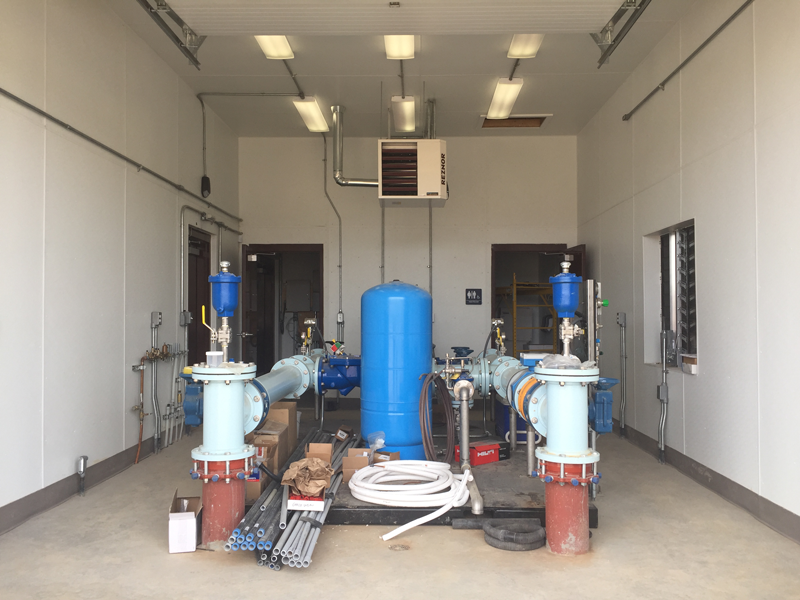
Image credit: romtecutilities.com
Retrofitting a pumping station that is precisely designed can help save infrastructure while also replacing parts that are no longer in compliance with functional requirements.
Begin with the structure that nobody wants to replace.
Wet wells are often the most costly and disruptive part to replace, since they are buried and connected to pipes that are already in place, and vital to wastewater collection.
Retaining the concrete structure may decrease excavation and construction work.
However, the deterioration around the access hatch could affect the decision. Romtec Utilities has identified wet-well hatch replacement as a crucial retrofit. It may be more durable to replace the top layer instead of installing a brand new hatch onto deteriorated concrete. This approach can improve access and improve the functionality of the structure without the need to replace the entire wet well.
The engineering of pumps that are more powerful is distinct
Imagine a neighborhood which has seen a substantial increase since the opening of a lift station. The current pumps may not be able to deal with the increased flow of wastewater.
A pumping station upgrade could involve higher-horsepower pumps, but equipment selection cannot happen independently of the surrounding system.
Engineers should also evaluate the requirements for hydraulics of the system, including the rate of flow and the dynamic head total. Installing a larger pump without evaluating the situation can cause more problems than it solves. Planning future capacity at the time of designing the initial design makes expansion later considerably easier.
Make sure that the water for waste is moving throughout the construction process
Retrofitting a pump station for wastewater is a unique problem which is not faced by other projects. The station might need to be operational throughout construction.
When contractors aren’t busy the wastewater still flows in. Based on the nature of the project an interim bypass pumping system may be required to keep the service until existing equipment is removed, and new components are erected.
Romtec Utilities tackled this type of challenge at the Federal Law Enforcement Training Center in Brunswick, Georgia.
The project involved replacing two older wastewater lift stations in the process of maintaining operation at the facility. Specific engineering for the site and packaged replacement systems and bypass pumping strategies were used to allow for the existing station footprints as well as operational requirements. This example shows how important it is to look at the construction process before installing.
When replacing is the most efficient alternative
Not all stations are suited to be renovated. If the sewer lift station is in need of replacement due to a badly deteriorated well, structural constraints, or significant changes in the hydraulic requirements, it could be more appropriate to replace the station rather than modify.
In making a decision, it is crucial to look at the structural condition of the building, its compatibility equipment, access to construction, continuity of service and long-term requirements. Romtec Utilities starts retrofitting and replacing projects by identifying components that will be retained and those that need to be replaced.
The company then develops engineering solutions specific to the site, as well as preliminary designs as well as budget estimations. Prefabricated parts can also help facilitate installation and cut down on on-site construction requirements.
The Project isn’t Complete When the Pumps Are Set to Start
Modernized lift stations must be operated as a system in one. Before returning a lift-station to normal service, startup tests, commissioning and equipment verification are necessary to ensure that all pumps, control systems, and related equipment operate as designed.
Operator training and operation and maintenance manuals are equally crucial. Maintenance personnel should be knowledgeable with the new equipment and operating procedures, in addition to the manuals before they assume charge of the station.
A successful retrofit will preserve the infrastructure while still addressing the weaknesses that forced modernization.
Municipalities and owners of facilities must consider more than just immediate repairs. The most effective project is one that integrates the new equipment into existing structures, ensures vital service during construction, and prepares the pumping system for years of continuous operation.